




Premises Liability Lawyer in Anderson

When unsafe property conditions cause serious injuries, the aftermath can be overwhelming. Medical appointments begin to stack up. Lost time at work puts pressure on your finances. Insurance adjusters call with questions you are not ready to answer.
Our role as your Anderson injury lawyer is to step in, protect your rights, and build a strong claim for full and fair compensation under Indiana law.
Why Clients in Anderson Trust Our Team
Vaughn A. Wamsley has dedicated more than three decades to advocating for injured people in Indiana courts. He is admitted to practice in Indiana state courts and the U.S. District Courts for the Northern and Southern Districts of Indiana. He earned his J.D. from Indiana University and studied finance at Indiana University Bloomington, which gives our firm practical insight into how to document losses and present damages.
Early in life, Mr. Wamsley was himself seriously injured by a drunk driver while riding a bicycle, an experience that informs the way we prepare every case and the commitment we bring to every client.
We offer free consultations and represent injury clients on a contingency fee basis, meaning you pay no attorney fee unless and until we recover compensation for you. This model aligns our interests with yours and allows you to focus on healing while we handle your claim.
Our practice serves clients throughout Madison County and the greater Anderson area. We know the local courts and insurers, and we understand how to move a case forward efficiently for people here at home.
What Counts as a Premises Liability Claim
Premises liability is the body of law that holds property owners and those in control of property responsible when an unsafe condition on the premises causes foreseeable harm. Common examples include:
- Slip, trip, and fall events caused by spills, leaks, broken tiles, loose mats, or debris
- Falls on ice or snow that was allowed to accumulate without reasonable removal
- Defective stairs, handrails, ramps, or lighting
- Collapsed decks, walkways, or merchandise displays
- Injuries in common areas of apartments or rental properties
- Negligent security leading to assaults in parking lots, hotels, or events
- Hazards at stores, restaurants, big box retailers, and construction sites
In Indiana, the highest duty of care is owed to invitees such as customers and tenants. Our Supreme Court has explained that landowners must exercise reasonable care for an invitee’s protection and may be liable when they know or should discover a dangerous condition, realize it involves an unreasonable risk of harm, and fail to take reasonable steps to protect invitees from that danger.
Indiana Law, at a Glance
Duty of Care
For invitees, Indiana follows the Restatement (Second) of Torts Section 343 framework. Courts ask whether the landowner knew or, by exercising reasonable care, would have discovered the dangerous condition, whether they should expect that invitees would not find the danger or protect themselves, and whether they failed to exercise reasonable care to protect against the threat. Recent Indiana Supreme Court decisions continue to apply this standard to a wide variety of situations.
Comparative Fault
Indiana uses modified comparative fault. Your percentage of fault reduces your damages, and recovery is barred only if your fault is greater than the combined fault of the defendants. Put simply, if you are 50 percent or less at fault, you can still recover; if you are more than 50 percent at fault, you cannot.
Statute of Limitations
For most personal injury claims, including premises liability, Indiana generally provides two years from the date of injury to file a lawsuit. There are exceptions, so prompt legal review is essential.
Claims Involving Government Property
If your injury occurred on city, county, or other local government property, strict notice rules apply. For a claim against a political subdivision, written notice must be filed within 180 days of the loss. For a claim against the State of Indiana or a state agency, the deadline is 270 days. Missing these deadlines can bar your claim regardless of its merits.
Elements We Must Prove

To win a premises liability case in Indiana, we typically need to establish four elements:
- Duty: The owner or occupier owed you a duty of reasonable care based on your legal status on the property. Invitees such as shoppers, delivery drivers, and tenants are owed the most protective duty.
- Breach: The defendant failed to act as a reasonably prudent property owner or occupier would under the circumstances. Breach can be shown through poor inspection routines, failure to repair, missing warning signs, or violations of building or safety codes.
- Causation: The unsafe condition and the defendant’s failure to address it were a substantial factor in causing your injuries.
- Damages: You suffered actual harm, which may include medical bills, lost wages, pain and suffering, and loss of everyday life.
Courts assess these questions fact by fact. For example, the Indiana Supreme Court has held that the reasonableness of a landowner’s conduct toward an invitee is often a question for the jury.
Common Defenses and How We Respond
Property owners and insurers frequently raise defenses. We prepare for them from day one.
Open and Obvious Condition
Defendants sometimes argue that a danger was so apparent that a reasonable person would have avoided it. That contention is not automatically a complete defense. The proper inquiry under Indiana law remains whether the landowner exercised reasonable care in light of the condition and the circumstances.
Lack of Notice
Owners claim they did not know about the hazard. We examine cleaning logs, surveillance footage, work orders, and employee testimony to prove actual or constructive notice, meaning they should have discovered the condition through reasonable inspection.
Comparative Fault
Adjusters may say you were careless or distracted. Indiana’s comparative fault rules reduce damages by the plaintiff’s percentage of fault but do not bar recovery unless the plaintiff’s fault exceeds 50 percent. We gather witness accounts, incident reports, and expert opinions to challenge unfair fault allocations.
Storm or Weather Event
Ice, snow, or rain does not excuse unreasonable maintenance practices. We analyze weather data, de-icing schedules, and the timing of inspections to demonstrate what reasonable steps were required.
Third-Party Acts
In negligent security cases, a property owner may point to a criminal attacker as the sole cause. Indiana law still asks whether the owner exercised reasonable care to protect invitees under the circumstances, which may include lighting, staffing, and prior incident history.
How Do We Build a Strong Premises Case
Our approach is thorough, disciplined, and trial-ready. Here is how we work the case from the start:
- Rapid preservation of evidence: We send preservation letters to secure surveillance video, incident logs, maintenance records, and relevant digital data. We photograph the scene, measure slopes and lighting, and, when appropriate, retain engineers or safety professionals.
- Notice and liability analysis: We assess whether the owner had actual or constructive notice, compare policies to industry standards, and identify code violations. In multi-tenant or construction settings, we map contractual control to determine who is legally responsible for inspection and repair.
- Medical and damages documentation: We coordinate with your providers to document diagnoses, treatment plans, and prognoses. We build a damages model that includes medical expenses, wage loss, diminished earning capacity, future care, and non-economic harms.
- Comparative fault mitigation: We address potential arguments about footwear, distractions, or route choice with human factors testimony and site data. Our goal is to keep any fault attributed to you as low as the facts support under Indiana’s rules.
- Negotiation and litigation: We present a structured settlement demand with supporting evidence and expert reports. If the insurer refuses to pay fair value, we file suit and prepare the case for a Madison County jury.
Evidence Checklist for Anderson Premises Cases
Bring what you can. We will do the rest.
- Photos or videos of the hazard and the surrounding area
- Names and statements of witnesses or responding employees
- Incident or injury reports completed at the scene
- Medical records, bills, and lists of providers
- Receipts showing out-of-pocket expenses and mileage
- Damaged clothing, footwear, or assistive devices
- Employer confirmation of missed work and wage information
If the incident occurred at a government facility, please contact us immediately to ensure we meet the Indiana Tort Claims Act notice deadlines: 180 days for political subdivisions and 270 days for state agencies.
Damages Available in Indiana Premises Liability Cases
Every case is unique, but recoverable damages may include:
- Medical costs, including future treatment and rehabilitation
- Lost wages and diminished earning capacity
- Pain, suffering, and loss of enjoyment of life
- Scarring, disfigurement, and permanent impairment
- Caregiving and household services you can no longer perform
- Property damage associated with the incident
We build damages with medical evidence, vocational analysis, and, when needed, life care planning. Our finance background enhances the way we present economic losses and future costs.
Special Considerations for Renters and Visitors
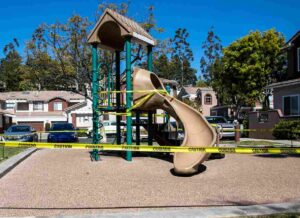
Apartment complexes, hotels, and retail stores in Anderson have legal obligations to maintain common areas in a reasonably safe condition. That includes stairwells, entrances, sidewalks, parking lots, elevators, and hallways.
When a hazard is temporary, such as a spill or tracked-in snow, the question often turns on inspection frequency and response time. When a condition is structural, such as a loose handrail or non-compliant step height, code compliance and long-standing notice become central issues.
We identify all entities that may share responsibility. Property owners, management companies, national retailers, maintenance contractors, and security vendors may each bear legal fault depending on their control over the premises. Indiana’s comparative fault rules permit a jury to apportion fault among multiple defendants and to reduce a verdict only by the plaintiff’s percentage of fault.
Timelines That Matter in Anderson, Indiana
- Immediately: Seek medical care and follow your provider’s instructions. Report the incident to the property owner or manager and request a copy of any incident report.
- Within days: Contact our office so we can preserve video and records that may be overwritten quickly.
- Within weeks: We conduct a site inspection and retain experts if needed.
- Within two years: File suit before the statute of limitations expires for most personal injury claims in Indiana.
- Within 180 or 270 days: If the defendant is a governmental entity, file the required tort claim notice to preserve your right to sue later.
Frequently Asked Questions
What if I did not see the hazard before I fell?
Indiana law does not require that you anticipate every danger. The focus is on whether the property owner acted reasonably in finding and fixing hazards or warning about them. Whether a danger was open or obvious is only part of the overall analysis and usually does not end the case by itself.
I was looking at my phone. Do I still have a case?
Possibly. Your attention may be considered in assigning comparative fault, which could reduce your damages, but recovery is still available as long as your share of fault does not exceed 50 percent.
The store cleaned the spill right after I fell. Is it too late?
No. We move quickly to obtain incident reports, video, and maintenance records. We also interview witnesses and evaluate cleanup timing to establish what the store knew and when it knew it.
I fell on a city sidewalk in Anderson. What should I do?
Contact us right away. Claims involving cities and other political subdivisions require a written notice within 180 days of the incident, and failing to give that notice on time can bar the claim.
How long will my case take?
Timeframes vary based on medical treatment, cooperation from insurers, and court schedules. We keep you informed at every step and pursue the most efficient path to a fair resolution.
Our Results-Driven Approach
Our firm’s published case results include numerous significant recoveries for injured clients, and we have helped thousands of accident victims statewide. Past results do not guarantee future outcomes, but they demonstrate our ability to investigate complex facts and present compelling evidence to insurers and juries.
In every case, our goal is the same: to secure the best available result under Indiana law through careful preparation, clear communication, and persistent advocacy. When the settlement does not reflect the evidence, we are prepared to try the case.
We Can Help with Your Premises Liability Case
Choosing the proper premises liability attorney in Anderson is an important decision. With decades of experience, court admissions across Indiana, and a client-first approach built on empathy and preparation, our team is ready to protect your claim. We offer free consultations, and there is no attorney’s fee unless we recover compensation for you.
Call or contact us online to speak with a personal injury attorney in Anderson, IN, today.
About Our Firm
We represent people, never insurance companies. We prepare each case as if it will be tried to a verdict, because thorough preparation leads to better outcomes in negotiation and court. We believe injured clients deserve compassion, straight answers, and disciplined legal work. If you need an Anderson, Indiana injury attorney after a fall, a structural failure, or a negligent security incident, we are ready to stand with you.
Key Takeaways
- Property owners and occupiers in Indiana owe invitees a duty of reasonable care under Section 343 principles.
- Indiana follows modified comparative fault with a 51 percent bar.
- The general statute of limitations for premises cases is two years, with shorter notice deadlines for claims against government entities.
- We offer free consultations and contingency fee representation for Anderson clients.