


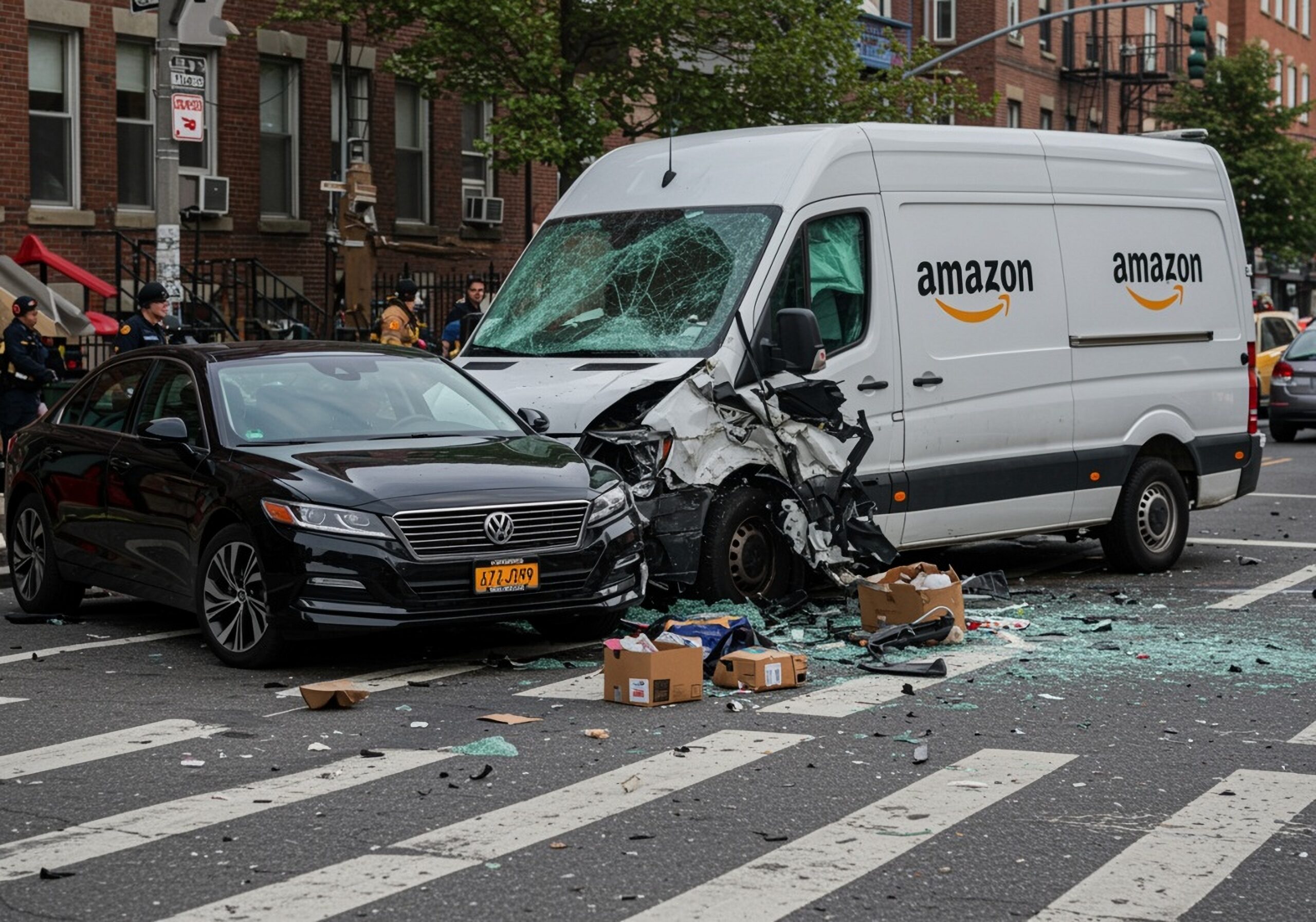
A delivery van can change your life in seconds. One moment, you are driving on I-465 or Meridian Street. Next, a blue Amazon van or a FedEx truck is in your lane.
These crashes often feel like normal wrecks at first. Then the phone calls start. The insurance adjuster is not from a local carrier. The driver says they do not work for Amazon or FedEx. The company will not return your calls. You are left hurt, stuck, and angry.
We see this pattern often. Delivery cases are not regular car accidents. They involve corporate systems built to limit responsibility. If you are dealing with a delivery van crash in Indianapolis, you need to know what is different and what steps protect your claim.
Vaughn A. Wamsley understands the stress and uncertainty in these situations. If you need help after an Indianapolis truck accident, he is here to help. It all starts with a phone call and a free consultation.
Why Delivery Van Cases Have Higher Stakes
Delivery fleets are everywhere in Indianapolis. Online shopping has put more vans on neighborhood streets, downtown routes, and tight suburban roads. More vans mean more risk. These vehicles are larger than passenger cars. They have bigger blind spots. They stop often. They also operate on strict schedules. Speed, fatigue, and distraction are common factors.
In a normal crash, you usually deal with a personal auto policy. In a delivery case, there may be multiple insurance layers. There may also be more than one liable party. That can raise the value of the case and the pushback coming from the other side.
Amazon Drivers Are Often Contractors, Not Employees
Amazon built its delivery network around contractors. Many drivers work for Delivery Service Partners, also called DSPs. Others drive under the Amazon Flex program. Amazon calls these drivers independent contractors. That is not a minor detail. It is a legal shield.
If a driver is not an Amazon employee, Amazon tries to deny responsibility. They may say the DSP is the employer. The DSP may tell the driver that they are solely at fault. This is why you need an Amazon delivery truck accident lawyer in Indianapolis who knows how to trace control and responsibility, not just the driver’s name on the report.
Courts around the country are growing more skeptical of Amazon’s contractor defense, especially when evidence shows Amazon controls routes, schedules, training, and vehicle standards.
That control can matter in proving Amazon should share liability.
FedEx Liability Depends On Which Division Was Delivering
FedEx truck accident liability is also more complex than most people expect. FedEx Express drivers are often direct employees. FedEx Ground drivers are often independent contractors who work for smaller delivery companies.
If the driver were an employee, FedEx could be responsible under vicarious liability. If the driver was a contractor, FedEx may deny liability. That does not end the inquiry. We look at who owned the van, who insured it, who set the delivery rules, and whether FedEx kept control over the job.
FedEx can also face direct liability for issues such as unsafe hiring practices, poor training, or neglected maintenance.
Commercial Insurance Is Larger, But Harder To Access
Delivery vans operate under commercial insurance systems. Coverage can exceed that of personal auto policies. That sounds good, but it comes with traps. Policies may be split between the driver, the DSP, a fleet owner, and a corporate umbrella carrier.
Each insurer may try to point to another policy. They may stall. They may push for a fast settlement that ignores long-term injuries. We step in early to identify all coverages and lock down evidence before it disappears.
Evidence Gets Deleted Faster In Delivery Cases
Delivery companies rely on tech. Vans may have GPS tracking, route apps, dash cameras, and telematics. This data can prove speed, braking, route timing, and driver behavior. The problem is retention. Many systems overwrite data within days or weeks.
In a regular crash, you might only need a report and photos. In a delivery case, we send preservation letters right away. We also look for:
- Route logs and delivery deadlines
- Driver training records
- Vehicle inspection and maintenance files
- App messages or dispatch notes
- Prior safety complaints about the driver or DSP
This evidence can make or break a liability case.
Tight Schedules Create Predictable Safety Problems
Amazon and FedEx drivers face constant time pressure. That pressure leads to risky choices. We often see:
- Rolling stops in neighborhoods
- Sudden lane changes on arterials like Keystone Avenue
- Double parking downtown
- Backing crashes in apartment lots
- Speeding to meet delivery windows
These patterns are not random. They are tied to the delivery model. Showing that link can strengthen a claim against the company, not just the driver.
What You Should Do After A Delivery Van Crash
If a delivery van hits you, treat it as a commercial case from day one. Here is what helps most.
- Call 911 and get a complete crash report. Make sure the report notes the company name on the vehicle.
- Photograph everything. Include the van logo, license plate, DOT numbers, and any packages inside if visible.
- Get witness names and numbers. Delivery drivers may leave quickly. Witnesses matter.
- Seek medical care the same day. Symptoms often grow after adrenaline fades.
- Do not give a recorded statement to any insurer even if they sound friendly.
- Save all bills and time missed from work. Start a simple folder.
- Talk to an accident lawyer in Indianapolis early. Timing matters more in delivery cases.
These steps protect your health and your claim.
Common Injuries We See In Delivery Van Wrecks
Delivery vans hit harder than cars. Even at city speeds, force is high. Injuries often include:
- Head trauma and concussions
- Neck and back injuries
- Broken ribs or limbs
- Shoulder and knee damage
- Deep bruising and soft tissue tears
- Psychological stress and driving anxiety
Some injuries look mild at first. Others require months of treatment. We build claims based on full medical realities, not the first ER note.
How We Build A Strong Claim
Every case is different. Our process stays focused on proof and leverage.
- We investigate the driver’s status—whether employee or contractor.
- We identify all responsible parties. Driver, DSP, fleet owner, and corporate parent may all apply.
- We secure digital evidence early.
- We document your injuries in a way insurers cannot ignore.
- We calculate full damages. That includes future care and lost earning ability.
- We negotiate from strength and prepare every case as if it were a trial.
Large companies expect people to give up. We do not.
You Do Not Have To Take On A Corporate Giant Alone
After a delivery van crash in Indianapolis, it is normal to feel overwhelmed. These companies have teams designed to reduce payouts. They count on your fatigue and uncertainty. That is why the right legal help matters.
If an Amazon or FedEx van hit you, talk with us. We will explain your options in clear terms. We will tell you what the case is worth and why. Then we will fight to get it.