


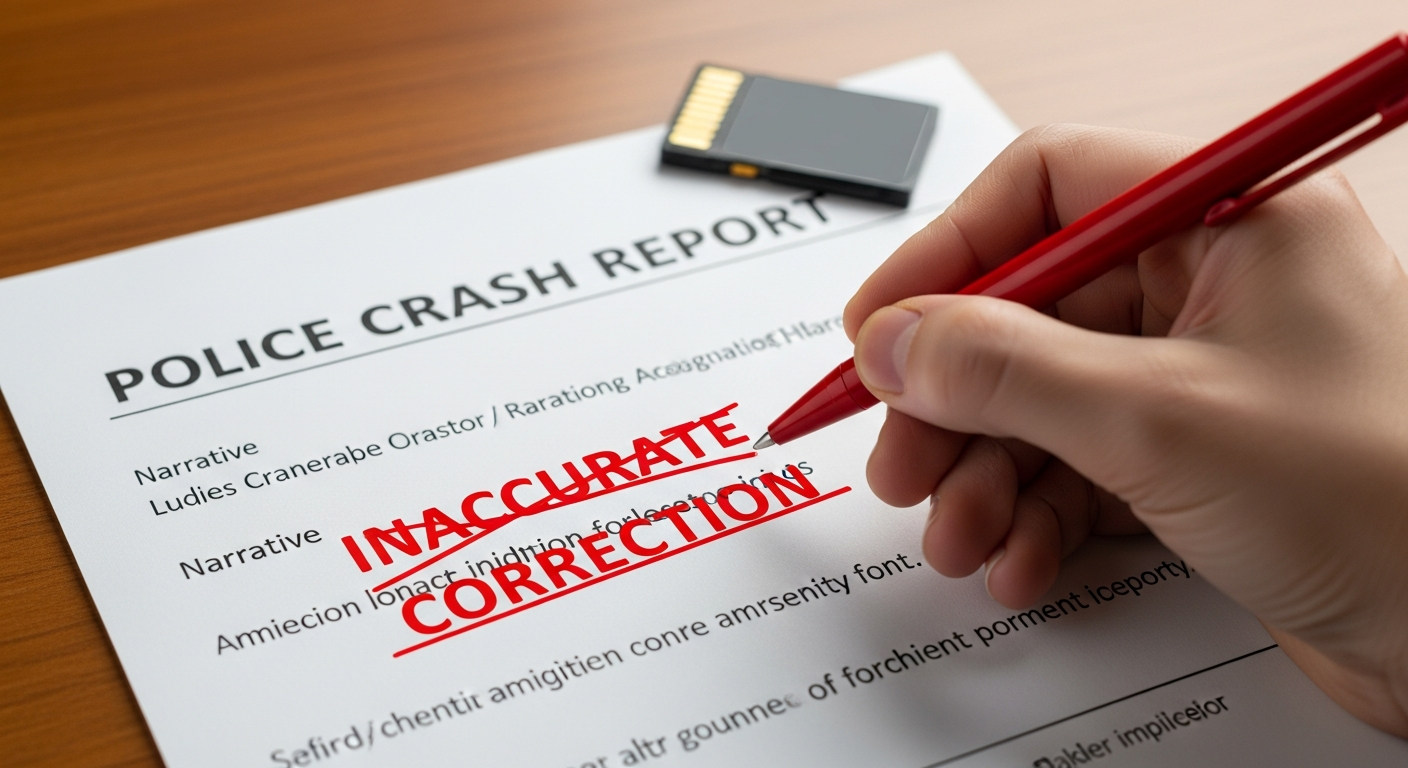
You just lived through a crash. Your heart is still racing. Your car may be totaled. Your body may hurt in ways you cannot name yet. Then you read the police report and feel sick. It says something that is not true. Maybe it blames you. Maybe it leaves out a key detail. Maybe it lists the wrong street, speed, or driver.
This happens more than people think. A police report is important, but it is not perfect. In Indianapolis, reports are written fast at busy scenes. Officers rely on what they see and what they are told. Honest mistakes can slip in.
A wrong report does not end your case. But you must act with a plan. We see this issue often as Indianapolis, IN car accident attorneys. Below is what to do next, step by step.
Why Police Reports Matter, But Do Not Decide Your Case
Insurance companies lean on police reports. They use them to assign fault and set the tone for settlement talks. If the report says you ran a red light, the adjuster may treat that as fact.
But a police report is only one piece of evidence. It is not a court ruling. Officers do not always see the crash happen. They may arrive after the vehicles move. They may hear two versions of the story in a loud, stressful moment.
That is why we tell clients this simple truth. A wrong report can be challenged. Your claim can still win when the facts support you.
Common Errors We See In Indianapolis Reports
Police reports can be wrong in small ways or big ways. Here are the issues we often find when reviewing a case as an accident lawyer in Indianapolis, IN.
- Wrong driver or passenger names
- Wrong insurance or vehicle details
- Incorrect time or location of impact
- Missing witnesses or bad witness info
- A diagram that does not match the scene
- A fault statement based on guesswork
- A note that you were not injured when you were
- A claim that you admitted fault when you did not
Some errors are clerical. Some are judgment calls. Both can matter.
Get A Copy Of The Report Fast
You cannot fix what you have not seen. Get the report as soon as it is ready. In Indianapolis, you can request an incident or crash report through the Indianapolis Metropolitan Police Department online system.
You may also need a copy from the Indiana State Police crash report portal in some cases, such as highway crashes or reports filed by troopers.
When you request it, have as much detail as you can. Date, time, location, names, and report number help speed things up.
Do not wait weeks. A fast review gives you more options.
Read It Like A Lawyer Would
When we review a report, we check for facts, not feelings. You can do the same.
Look At These Sections First
- Driver and vehicle information
- Witness list and contact details
- Officer narrative
- Diagram and point of impact
- Citations given, if any
- Injury notes and EMS details
Circle anything that is clearly wrong. Write down why it is wrong. Keep your notes simple. You want to point to facts you can prove.
Gather Evidence That Supports Your Version
Officers will not change a report just because you disagree. You need proof. Start collecting it right away.
Useful Evidence Includes
- Photos or video from the scene
- Dash cam footage
- Security footage from nearby stores or homes
- Witness statements
- Your medical records from the first visit after the crash
- Phone records showing you were not texting
- Repair estimates showing damage angles
- Traffic light or road construction records
Even a small detail can shift the fault. If a report says you hit the other car in the rear, but photos show a side impact, that matters.
Ask For A Correction Or Supplement
In Indiana, you can ask the officer or department to correct factual errors. This is easier for clear mistakes, such as the wrong license plate or the wrong street name. It is harder to dispute fault opinions.
How To Ask For A Correction
- Call the agency listed on the report.
- Ask for the officer who wrote it.
- State the exact error.
- Provide your supporting evidence.
- Ask for a correction or a supplemental report.
Be polite and direct. Stick to facts. Officers are more likely to help when the request is clear.
If the officer will not change the main report, they may add a supplement. A supplement can include your statement, new witnesses, or new evidence. This can still help your claim.
What If The Officer Refuses To Change It
This is common. Officers rarely change fault statements. That does not mean you are stuck.
We build cases that go beyond the report. We use evidence to show what really happened. We also use experts when needed, such as in crash reconstruction.
Insurance companies know reports are not perfect. If we present strong proof, they must deal with it.
Do Not Let A Bad Report Push You Into A Bad Settlement
A wrong report can create pressure. You might think you have no chance. You might accept a low offer. That is exactly what insurance companies hope for.
Indiana uses a modified comparative fault rule. If you are more than 50 percent at fault, you cannot recover damages. If you are 50 percent or less at fault, you can recover, but the amount drops by your fault share.
So the fault is a money issue. A report that overstates your fault can cut your settlement or erase it. That is why we fight it early.
Keep Indiana Deadlines In Mind
Even if the report is wrong, you still must meet deadlines.
In most Indianapolis injury cases, the statute of limitations is 2 years from the date of the crash under Indiana Code section 34-11-2-4.
Some cases have shorter notice rules. For example, claims involving government vehicles can require notice within months, not years.
If you wait too long, no correction will save the claim. The court can dismiss it. So treat time like evidence. Protect it.
How We Help When The Report Is Wrong
When clients call us about a bad report, we do not panic. We work the problem.
What We Do For You
Here is what we do as your Indianapolis injury attorney team.
- Get the full report and all supplements
- Track down listed and unlisted witnesses
- Pull video from businesses and traffic cameras fast
- Compare vehicle damage to the diagram
- Review medical records for injury timing
- Rebuild the crash sequence
- Push back on unfair fault claims
- Negotiate from facts, not assumptions
- File suit if the insurer will not be reasonable
A report is a starting point. Our job is to tell the full story with proof.
Steps You Can Take Today
If you think your police report is wrong, do these things now.
- Request the report and read it closely
- Write down every error you see
- Gather photos, video, and medical records
- Contact witnesses while memories are fresh
- Ask for a correction or supplement
- Talk with an Indianapolis, IN car accident attorney before you speak at length with insurance
You do not need to solve this alone. A focused plan can turn a bad report into a strong case.
Protect Your Rights
A wrong police report feels unfair. It can also feel personal. But it is not the end. The truth is still the truth. With evidence, we can show it.
If you want help, contact us. We will review your report, your evidence, and your options. We will tell you where you stand and what to do next.