






Many car accident injuries do not fully appear until hours or days after the crash. Adrenaline can temporarily mask pain, especially in injuries involving the neck, back, brain, or soft tissue. Delayed symptoms are extremely common after Indiana car accidents and can still support a valid injury claim. Waiting too long to seek treatment, however, can make it easier for insurance companies to challenge your case.
One of the most dangerous thoughts people have after a car accident is:
“I feel okay.”
Then two days later, they cannot turn their neck.
Their back tightens up. Headaches start. Sleeping becomes difficult. Work becomes painful. Suddenly, the crash that “didn’t seem serious” is affecting every part of daily life.
This happens constantly after car accidents in Indianapolis.
And unfortunately, insurance companies know it.
One of the biggest reasons people lose compensation after a crash is that they underestimate delayed injuries or wait too long to seek treatment.
Why Symptoms Often Do Not Appear Immediately
The human body reacts to trauma in ways most people do not expect.
After a collision, adrenaline and shock flood the nervous system. Those chemicals can temporarily suppress pain signals, even when the body has suffered significant injury.
That means someone can:
- Walk away from the crash
- Talk normally with the police
- Drive home afterward
- Still have a serious injury developing
Many clients are shocked when symptoms appear 24 to 72 hours later.
The Most Common Delayed Car Accident Injuries
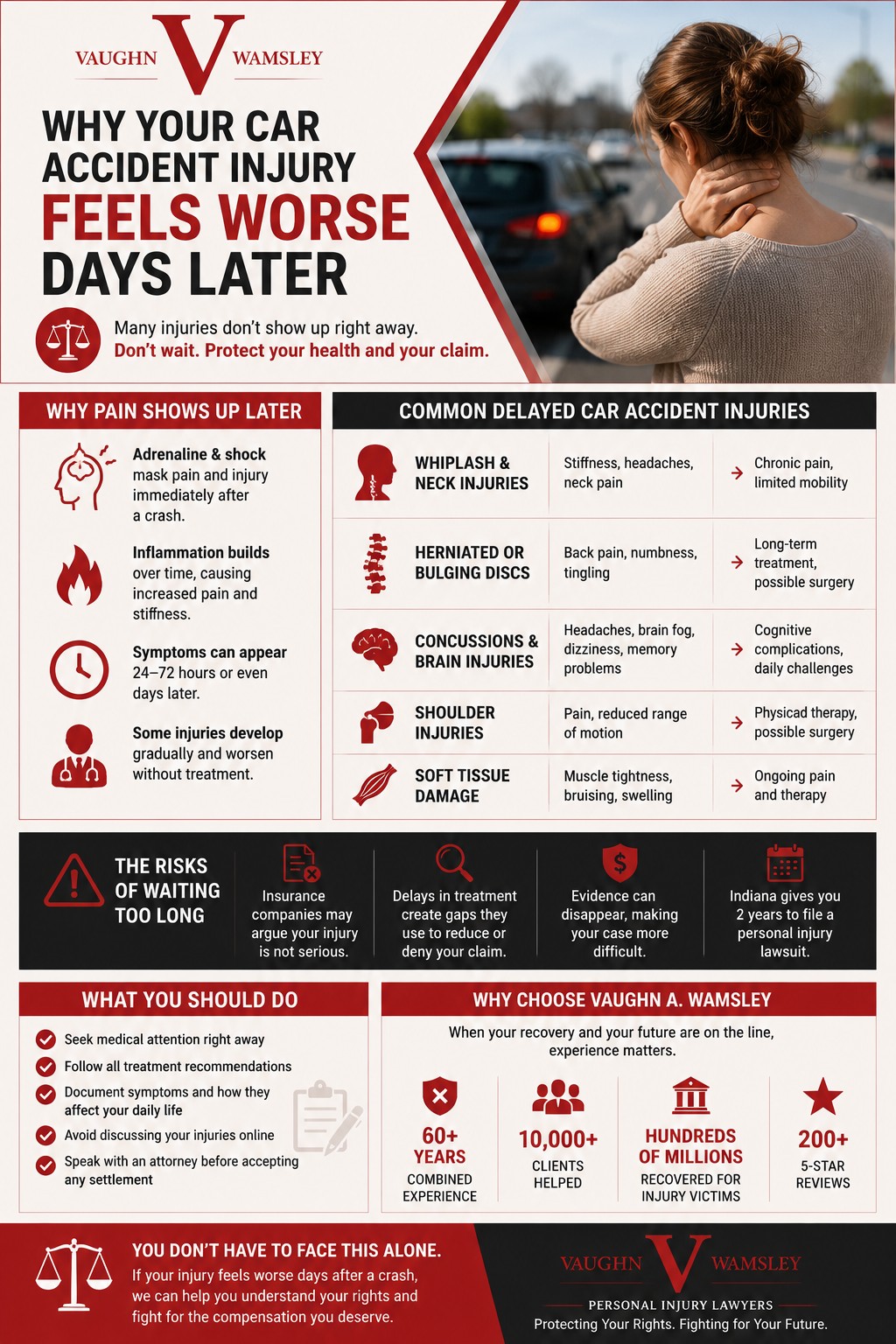
Not every injury appears immediately after impact. Some worsen gradually as inflammation and muscle tension increase.
Common delayed injuries include:
- Whiplash and neck injuries
- Herniated or bulging discs
- Concussions and traumatic brain injuries
- Shoulder injuries
- Soft tissue damage
- Back injuries and nerve pain
These injuries are especially common in rear-end collisions throughout Indianapolis, including crashes on I-465, Keystone Avenue, and other high-traffic commuter roads.
Why “Minor” Accidents Often Cause Real Injuries
One of the biggest myths in personal injury law is that serious injuries only happen in catastrophic crashes.
That is simply not true.
Many people develop painful injuries after low-speed collisions because the body absorbs force unevenly during impact. Even accidents with limited vehicle damage can create major physical strain.
Insurance companies love using photos of “minor” property damage to argue that someone could not possibly be hurt.
But emergency physicians, chiropractors, orthopedic specialists, and neurologists see these injuries every day.
The Hidden Problem With Waiting Too Long
This is where many valid injury claims start falling apart.
People wait because they think:
- “The pain will go away.”
- “I do not want to overreact.”
- “It is probably just soreness.”
Meanwhile, the insurance company is building a timeline.
The longer someone waits to seek treatment, the easier it becomes for insurers to argue:
- The injury was not serious
- Something else caused the pain
- The victim exaggerated symptoms
- Treatment was unnecessary
That does not mean you automatically lose your case. But it absolutely gives the insurance company leverage.
Concussions Are Frequently Missed After Car Accidents
Many people think a concussion only happens if someone loses consciousness.
That is false.
In reality, many traumatic brain injuries involve symptoms that develop gradually.
Warning signs can include:
- Headaches
- Light sensitivity
- Brain fog
- Memory problems
- Irritability
- Trouble concentrating
People often blame stress or exhaustion instead of realizing they may have suffered a brain injury.
This is one reason medical evaluation after an accident matters even when symptoms seem manageable initially.
Why Insurance Companies Love Delayed Injury Cases
Delayed injury claims create uncertainty. Uncertainty helps insurers reduce payouts.
Adjusters often argue:
- “If you were really hurt, you would have gone to the hospital immediately.”
- “Your records show delayed treatment.”
- “There is no proof the crash caused this.”
These arguments are extremely common in Indiana car accident claims.
What most people do not realize is that insurance companies are trained to look for gaps in treatment and inconsistencies they can use against you later.
What You Should Do if Symptoms Start Days Later
If pain or symptoms appear after a crash, the most important thing you can do is take them seriously.
You should:
- Seek medical attention immediately
- Explain when the symptoms began
- Follow treatment recommendations carefully
- Document how injuries affect daily life
- Avoid minimizing symptoms to doctors or insurers
Many people try to “tough it out” after a crash. That often becomes a costly mistake both medically and legally.
How Delayed Injuries Affect Compensation
A delayed injury can still support a strong personal injury claim.
Compensation may include:
- Medical expenses
- Future treatment costs
- Lost wages
- Reduced earning capacity
- Pain and suffering
- Emotional distress
The key is to build clear medical documentation that connects the injuries to the crash.
Delayed Injury Compensation Overview
| Injury Type | Common Delayed Symptoms | Potential Long-Term Impact |
| Whiplash | Neck stiffness, headaches | Chronic pain |
| Herniated Disc | Back pain, numbness | Mobility limitations |
| Concussion | Brain fog, dizziness | Cognitive complications |
| Shoulder Injury | Reduced range of motion | Surgical treatment |
| Soft Tissue Damage | Muscle tightness, swelling | Ongoing therapy needs |
Why Social Media Can Hurt Delayed Injury Claims
One of the biggest mistakes people make after an accident is posting online too soon.
Insurance companies actively monitor social media accounts looking for:
- Photos
- Activities
- Statements
- Travel
- Exercise or physical movement
Even harmless posts can be taken out of context.
Someone smiling in a family photo may later hear:
“You did not seem injured.”
This happens more often than people realize.
Why Choose Vaughn A. Wamsley
When symptoms appear after a crash, experience matters.
Vaughn A. Wamsley brings:
- Over 60 years of combined legal experience
- Hundreds of millions recovered for injury victims
- More than 10,000 clients helped
- Over 200 five-star reviews from real clients
Clients consistently mention communication, responsiveness, and personal attention. Cases are handled directly by Vaughn Wamsley, not passed off after intake.
The firm works on a contingency fee basis, which means there are no upfront legal fees and no cost unless compensation is recovered.
The Biggest Mistake People Make After Feeling “Fine”
The most expensive mistake after a car accident is assuming the absence of immediate pain means the absence of injury.
Many people delay treatment until symptoms become severe. By then:
- Injuries may be worse
- Documentation gaps exist
- Insurance companies have stronger arguments
Acting early protects both your health and your legal rights.
The Bottom Line
Delayed injuries after car accidents are extremely common. Feeling okay immediately after a crash does not mean you escaped injury.
Pain, headaches, numbness, stiffness, and cognitive symptoms can appear days later, especially after rear-end collisions and other high-impact crashes.
If symptoms develop after an accident in Indianapolis, seeking medical attention quickly can protect both your recovery and your claim.
Vaughn A. Wamsley, an experienced personal injury lawyer in Indianapolis, Indiana, can help determine whether you may still have a valid case, even if injuries appeared later.
FAQs
Is it normal for pain to appear days after a car accident?
Yes. Delayed symptoms are extremely common after crashes, especially with soft tissue injuries and concussions.
Can I still file a claim if I did not go to the hospital immediately?
Possibly. Delayed treatment can complicate a claim, but it does not automatically prevent compensation.
What are the most common delayed car accident injuries?
Whiplash, herniated discs, concussions, and soft tissue injuries are among the most common.
Can insurance companies deny claims because symptoms appeared later?
They may try to challenge the claim, which is why medical documentation is important.
Should I talk to a lawyer if symptoms started days later?
Yes. An attorney can help determine whether you still have a strong claim and protect you from insurance company tactics.
