





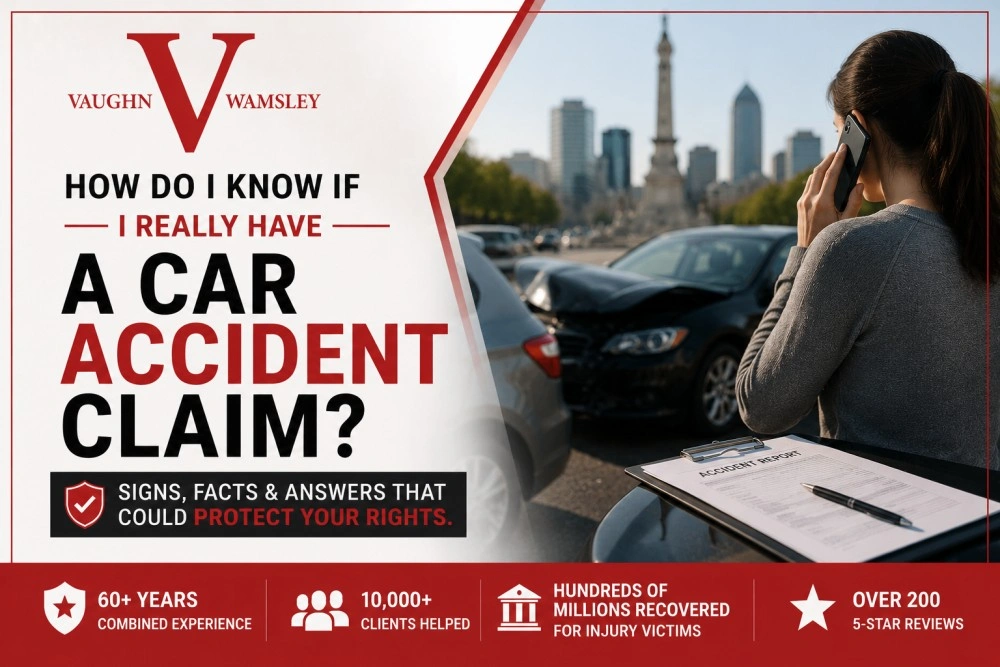
You may have a valid car accident claim if another driver’s negligence caused your injuries or financial losses. Even if the accident seems minor, you could still recover compensation for medical bills, lost income, pain and suffering, and future treatment costs. Insurance companies often downplay claims early, which is why speaking with an Indianapolis car accident lawyer can help you understand the true value of your case.
Do You Have a Car Accident Claim?
A lot of people walk away from a crash thinking they are “probably fine” or that the accident was “not serious enough” to justify legal action.
Then the medical bills start arriving.
The neck pain gets worse. Work gets missed. The insurance company suddenly stops sounding helpful.
This happens more often than people realize. According to the National Highway Traffic Safety Administration, millions of people are injured in car accidents every year in the United States, and many initially underestimate the seriousness of their injuries.
The reality is simple: many valid car accident claims are ignored because people assume they do not have a case.
The Biggest Myth About Car Accident Claims
One of the most common misconceptions is that you only have a claim if the accident was catastrophic.
That is not true.
You may still have a valid claim if:
- You suffered injuries that required medical treatment
- Another driver acted negligently
- You missed work because of the accident
- Your injuries affected daily life or mobility
- The insurance company is disputing fault or minimizing your damages
A claim is not defined by how dramatic the crash looked. It is defined by whether someone else’s actions caused harm.
Signs You May Have a Strong Car Accident Claim
Some cases are stronger than others, but several indicators often point to a legitimate claim.
Another Driver Violated Traffic Laws
If the other driver was speeding, texting, ran a red light, or drove recklessly, that is strong evidence of negligence.
You Sought Medical Treatment
Medical documentation connects your injuries to the accident. Even delayed symptoms can support a claim if properly documented.
Insurance Companies Are Already Calling
If the insurer is pushing for quick statements or fast settlements, that usually means they know liability may exist.
Your Life Has Been Disrupted
A valid claim is not just about hospital bills. It can involve pain, stress, missed work, and long-term limitations.
Why Some Injuries Do Not Show Up Right Away
One reason people underestimate their claims is because symptoms are often delayed.
After an accident, adrenaline can mask pain for hours or even days. Soft tissue injuries, concussions, and spinal issues frequently worsen over time.
Common delayed symptoms include:
- Neck and back pain
- Headaches or dizziness
- Numbness or tingling
- Shoulder pain
- Difficulty concentrating
This is one reason waiting to seek medical attention can hurt both your health and your legal claim.
What Actually Makes a Car Accident Claim Valid?
A car accident claim generally comes down to four elements:
- Someone owed a duty of care
- That duty was breached through negligence
- The negligence caused the accident
- You suffered damages as a result
For example, every driver has a responsibility to operate their vehicle safely. If a distracted driver rear-ends another car and causes injuries, those elements are usually present.
An experienced Indianapolis car accident lawyer evaluates these factors to determine whether a case is legally viable.
Common Situations Where People Think They Do Not Have a Case
Some of the strongest claims come from situations where people initially assume they are out of options.
“The Damage Was Minor”
Vehicle damage does not always reflect injury severity. Many low-speed crashes still cause significant neck, back, and soft tissue injuries.
“I Was Partially at Fault”
Indiana follows a modified comparative fault system. You can still recover compensation if you are less than 51% responsible for the accident.
“I Did Not Go to the ER Immediately”
Delayed treatment can complicate a claim, but it does not automatically destroy it.
“The Insurance Company Offered Me Money Already”
Quick settlement offers are often designed to close claims before the full extent of injuries becomes clear.
What Compensation May Be Available?
The value of a claim depends on how the accident affected your life physically, emotionally, and financially.
Compensation may include:
- Medical expenses
- Future treatment costs
- Lost wages
- Reduced earning capacity
- Pain and suffering
- Emotional distress
- Property damage
Serious injuries can create long-term financial consequences that extend far beyond the initial crash.
Car Accident Compensation Overview
| Damage Category | Examples | Impact on Claim Value |
| Medical Expenses | ER visits, surgery, therapy | Often the largest component |
| Lost Income | Missed work, future limitations | Significant in serious cases |
| Pain and Suffering | Physical and emotional impact | Varies by injury severity |
| Property Damage | Vehicle repair or replacement | Usually straightforward |
| Long-Term Care | Ongoing rehabilitation or disability | High-value claims |
Why Insurance Companies Want You to Doubt Your Claim
Insurance companies know that uncertainty benefits them.
Many adjusters are trained to:
- Downplay injuries
- Suggest treatment is unnecessary
- Push quick settlement offers
- Shift partial blame onto victims
- Discourage people from contacting lawyers
The less confident you are about your claim, the easier it becomes for them to settle cheaply.
That is why many people accept far less than their case is actually worth.
The Importance of Evidence
Strong evidence can dramatically improve the outcome of a car accident claim.
Helpful evidence may include:
- Police reports
- Medical records
- Witness statements
- Photos of the accident scene
- Traffic camera footage
- Vehicle damage documentation
In Indianapolis, surveillance footage from intersections or nearby businesses can sometimes become critical evidence. Acting quickly matters because footage may be erased.
Why Timing Matters More Than Most People Realize
Waiting too long after an accident can weaken your claim.
Evidence disappears. Witness memories fade. Insurance companies gain more leverage.
According to the Indiana statute of limitations, accident victims generally have two years to file a personal injury claim. But waiting even a few weeks can create avoidable problems when trying to prove injuries or liability.
As emphasized by Vaughn A. Wamsley, every hour you wait gives the insurance company an advantage.
Why Choose Vaughn A. Wamsley
When you are trying to determine whether you have a case, experience matters.
Vaughn A. Wamsley brings:
- Over 60 years of combined legal experience
- Hundreds of millions recovered for injury victims
- More than 10,000 clients helped
- Over 200 five-star reviews from real clients
Clients consistently mention communication, responsiveness, and personal attention. Cases are handled directly by Vaughn Wamsley, not passed off after intake.
The firm works on a contingency fee basis, meaning there are no upfront costs and no legal fees unless compensation is recovered.
What You Should Do After a Car Accident
The steps you take after a crash can directly affect your claim.
You should:
- Seek medical attention immediately
- Follow all treatment recommendations
- Document injuries and vehicle damage
- Avoid discussing fault publicly or online
- Speak with an attorney before accepting a settlement
Even if you are unsure whether you have a case, getting legal guidance early can prevent costly mistakes.
The Bottom Line
Many people who believe they do not have a car accident claim are wrong.
If another driver’s negligence caused injuries, financial losses, or long-term complications, you may be entitled to compensation even if:
- The crash seemed minor
- You were partially at fault
- Symptoms appeared later
- The insurance company says your claim is weak
Vaughn A. Wamsley, an experienced auto accident attorney in Indianapolis can evaluate your situation, explain your options, and help determine the true value of your case.
FAQs
Do I still have a claim if the accident was minor?
Possibly. Even low-speed accidents can cause significant injuries that lead to valid claims.
What if I was partially at fault for the crash?
Indiana law allows compensation as long as you are less than 51 percent responsible.
How much is my car accident claim worth?
Every case is different. Factors include medical costs, lost wages, pain and suffering, and long-term effects.
Should I talk to the insurance company before speaking with a lawyer?
You should be cautious. Insurance companies may use your statements to reduce your claim.
How long do I have to file a car accident claim in Indiana?
In most cases, you have two years from the date of the accident to file a personal injury lawsuit.
About the Author

Vaughn A. Wamsley
Vaughn A. Wamsley is the owner and founder of the law office of Vaughn A. Wamsley, an Indiana personal injury law firm.