





Yes. Under Indiana’s dram shop law, Indiana Code 7.1-5-10-15.5, a bar, restaurant, or other person who serves alcohol can be held liable for a drunk driving crash if they served someone they knew was visibly intoxicated and that intoxication caused the crash. This claim can be brought in addition to the claim against the drunk driver and can provide another source of compensation.
By Vaughn A. Wamsley, Indianapolis personal injury attorney with more than 30 years of experience representing injured Hoosiers.
When a drunk driver causes a crash, most people focus on the driver, and rightly so. But the driver is not always the only one responsible. If a bar kept serving someone who was obviously drunk and then let them walk out to their car, Indiana law may allow you to hold that bar accountable too. These claims are known as dram shop claims, and they can make a major difference when the driver carries only minimal insurance. This article explains how dram shop liability works in Indiana, what you have to prove, and what to do if you believe a bar or host contributed to your crash. For a broader look at these cases, visit our page on drunk driving accidents in Indianapolis.
How Big Is the Drunk Driving Problem in Indiana?
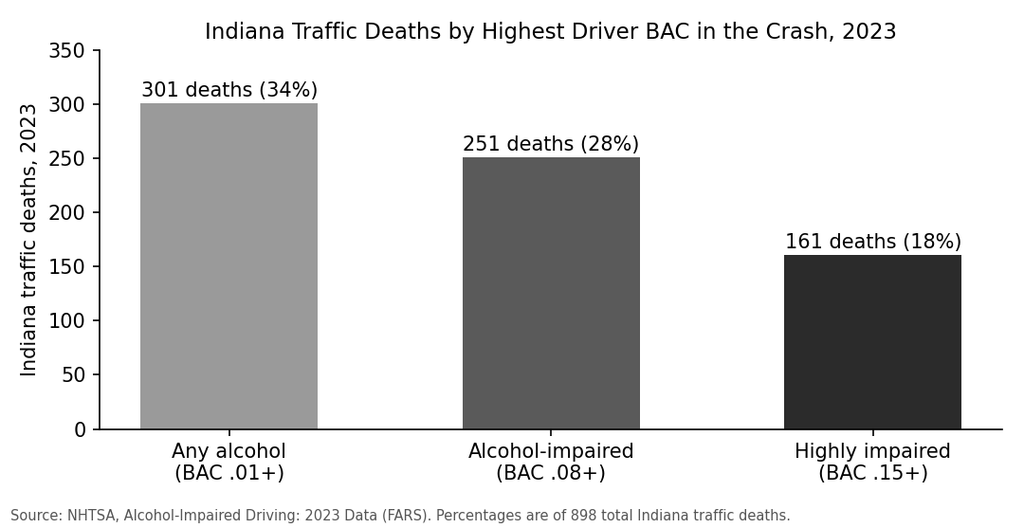
Alcohol-impaired driving remains one of the leading causes of deadly crashes in Indiana. According to NHTSA, 251 people were killed in Indiana crashes involving an alcohol-impaired driver in 2023, about 28 percent of all traffic deaths in the state. In 161 of those deaths, the driver’s blood alcohol concentration was 0.15 or higher, nearly twice the legal limit. A driver at that level is often showing obvious signs of intoxication, which is exactly the kind of situation dram shop law addresses.
What Indiana’s Dram Shop Law Says
Indiana’s dram shop statute, Indiana Code 7.1-5-10-15.5, limits when someone who furnishes alcohol can be held responsible for injuries caused by the person who drank it. Liability exists only when two conditions are met: the person furnishing the alcohol had actual knowledge that the person was visibly intoxicated at the time it was served, and the intoxication was a proximate cause of the death, injury, or damage.
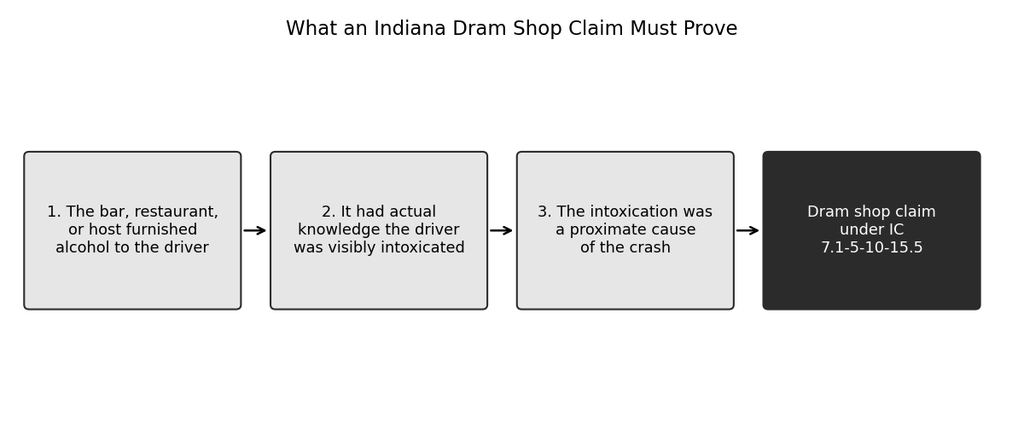
The statute applies to anyone who furnishes alcohol. That includes bars, taverns, restaurants, liquor stores, event venues, and caterers, and it can include private individuals such as party hosts. The key is not the type of business, but whether the server knew the person was visibly intoxicated and served them anyway.
Proving the Bar Knew the Driver Was Visibly Intoxicated
The actual knowledge requirement is usually the central battleground in an Indiana dram shop case. Bars rarely admit that they knowingly served a drunk customer, so these cases are typically proven with circumstantial evidence that shows what the staff saw or must have seen. Common signs of visible intoxication include slurred speech, stumbling or swaying, glassy or bloodshot eyes, loud or aggressive behavior, spilling drinks, and fumbling with money or cards.
| Evidence | What It Can Show |
|---|---|
| Receipts and point-of-sale records | How many drinks were served, what kind, and when |
| Surveillance video | The driver’s behavior inside the bar and how staff responded |
| Credit card statements | Timing and amount of purchases, including tabs closed late in the night |
| Witness statements | Observations of the driver’s speech, balance, and behavior |
| Post-crash blood alcohol test | How much the driver consumed, supported by expert analysis |
| Server and bartender testimony | What staff noticed, and whether policies or training were ignored |
| Social media posts and photos | Where the driver was and what they were drinking |
Timing matters. Surveillance footage is often recorded over within days or weeks, and staff memories fade quickly. A preservation letter sent early can require the bar to keep video, sales data, and staffing records before they are lost.
Can You Sue a Party Host?
Because Indiana’s statute applies to any person who furnishes alcohol, a social host can also be held liable if they served a guest while knowing the guest was visibly intoxicated, and the guest then caused a crash. Holiday parties, tailgates, weddings, and backyard gatherings can all lead to these claims. Social host cases depend heavily on witness testimony, since there are usually no receipts or video. In some situations, the host’s homeowners insurance may provide coverage.
Who Can Bring a Dram Shop Claim
Dram shop claims exist to protect innocent people injured by intoxicated drivers. That typically includes other drivers, passengers in other vehicles, pedestrians, cyclists, and motorcyclists. Pedestrians struck by drunk drivers have the same rights, and our page on intoxicated pedestrian accidents explains how fault is handled when alcohol is involved on either side.
Indiana law generally does not allow an adult who voluntarily became intoxicated to sue the bar for their own injuries. When a crash is fatal, the family may pursue a wrongful death claim against both the driver and any provider who unlawfully served them.
Why Adding the Bar Can Matter for Your Recovery
Many drunk drivers carry only the minimum auto insurance Indiana requires, which is often far below the cost of a serious injury. A bar or restaurant usually carries commercial liability or liquor liability insurance. Adding a dram shop claim can open access to that coverage and make full compensation possible for medical bills, lost wages, pain and suffering, and long-term care needs.
Indiana’s comparative fault system allows fault to be divided among everyone responsible, including the driver and the bar. Learn more about how comparative fault works in Indianapolis accidents. Dram shop principles also apply to commercial vehicles, and our drunk truck driver accident page covers how trucking companies and establishments can share liability.
What to Do After a Crash With a Drunk Driver
- Call 911, request police, and get medical care right away.
- Tell officers if you smelled alcohol or noticed signs of impairment, so they can document it and test the driver.
- Note anything the driver says about where they were drinking, and look for receipts, cups, or wristbands in or around the vehicle.
- Collect names and contact information for witnesses.
- Get a copy of the crash report. You can learn how to request a police report for your crash.
- Avoid giving recorded statements to any insurance company before speaking with a lawyer.
- Contact an attorney quickly so preservation letters can go out before video and records disappear.
You can also find a broader overview of the rules that apply to these cases in Indianapolis car accident laws explained.
Vaughn Wamsley on Holding Bars Accountable
“When someone is hurt by a drunk driver, we always ask the same question early on: where was this person drinking? A bar that keeps pouring drinks for someone who can barely stand up is putting everyone on the road at risk. These cases are won or lost on evidence, so we move fast to lock down the receipts, the surveillance video, and the bartenders’ accounts before they disappear. Very often, the bar’s insurance is what makes it possible for an injured family to be fully compensated.” Vaughn A. Wamsley
Hurt by a drunk driver in Indiana? Vaughn A. Wamsley has more than 30 years of experience fighting for injured Hoosiers, has recovered hundreds of millions of dollars for clients, and has earned more than 200 Google reviews. You pay no fee unless we win. Call 317-846-1080 or see our results.
“Vaughn was a great advocate for my son who was in a motorcycle accident several years ago.” Jeff Banning, client review
Frequently Asked Questions
Can you sue a bar in Indiana if a drunk driver hits you?
Yes, in many cases. Indiana’s dram shop law allows an injured person to hold a bar, restaurant, or other provider liable if it served alcohol to someone it knew was visibly intoxicated, and that intoxication caused the crash. The claim is usually brought alongside the claim against the drunk driver.
What does visibly intoxicated mean under Indiana law?
It refers to outward signs of intoxication that a server could observe, such as slurred speech, stumbling, glassy or bloodshot eyes, loud or aggressive behavior, or difficulty handling money. Indiana requires proof that the provider actually knew the person was visibly intoxicated when it served them, and that knowledge can be shown through circumstantial evidence.
Can I sue a friend or party host who served the drunk driver?
Possibly. Indiana’s dram shop statute applies to any person who furnishes alcohol, not just businesses. A social host who served alcohol to a guest while knowing the guest was visibly intoxicated can face the same type of liability, although proving the host’s knowledge depends heavily on witnesses and other evidence.
Can the drunk driver sue the bar for their own injuries?
Generally, no. Indiana law limits claims by an adult who voluntarily became intoxicated and was then injured. Dram shop claims protect innocent third parties, such as other drivers, passengers, and pedestrians.
How long do I have to file a dram shop claim in Indiana?
Most personal injury claims in Indiana, including dram shop claims, must be filed within two years of the crash. Wrongful death claims also generally have a two-year deadline. Because surveillance video and sales records can disappear quickly, it is important to act fast.
What evidence proves a bar overserved the driver?
Useful evidence often includes receipts and point-of-sale records showing how many drinks were served and when, surveillance video, credit card statements, witness statements from other patrons, the driver’s blood alcohol level after the crash, and testimony from servers and bartenders.
Does suing the bar increase how much I can recover?
It can. Drunk drivers often carry only minimum auto insurance, which may not cover serious injuries. A bar or restaurant typically carries commercial liability or liquor liability insurance, which can provide an additional source of compensation.
Concerns People Often Raise
“I do not know where the driver was drinking.” That is common. Police reports, the driver’s statements, receipts, bank records, and social media can often identify where the driver was served. An attorney can use the legal process to obtain that information.
“The driver was already convicted. Is that not enough?” A criminal conviction holds the driver accountable to the state, but it does not pay your medical bills. A civil claim against the driver and any responsible bar is what provides compensation for your losses.
“Suing a local restaurant feels wrong.” Dram shop claims are typically paid by the business’s insurance. They also serve an important safety purpose by encouraging establishments to train staff and stop serving intoxicated customers.
What Happens When You Call Vaughn A. Wamsley
When you call, our team will ask what happened, where and when the crash occurred, what you know about the other driver, and what injuries you have and what treatment you have received. If there are signs a bar or host served the driver, we will act immediately to preserve video, sales records, and witness information. You will come away with a clear understanding of who may be responsible and what comes next.
Talk to an Indianapolis Drunk Driving Accident Lawyer
A drunk driving crash is never just an accident, and the people who contributed to it should be held responsible. If a bar, restaurant, or party host overserved the driver who hurt you, Indiana law may give you a claim against them too. Learn more about our Indianapolis drunk driving accident lawyers, call 317-846-1080, or contact us to discuss your case.
